

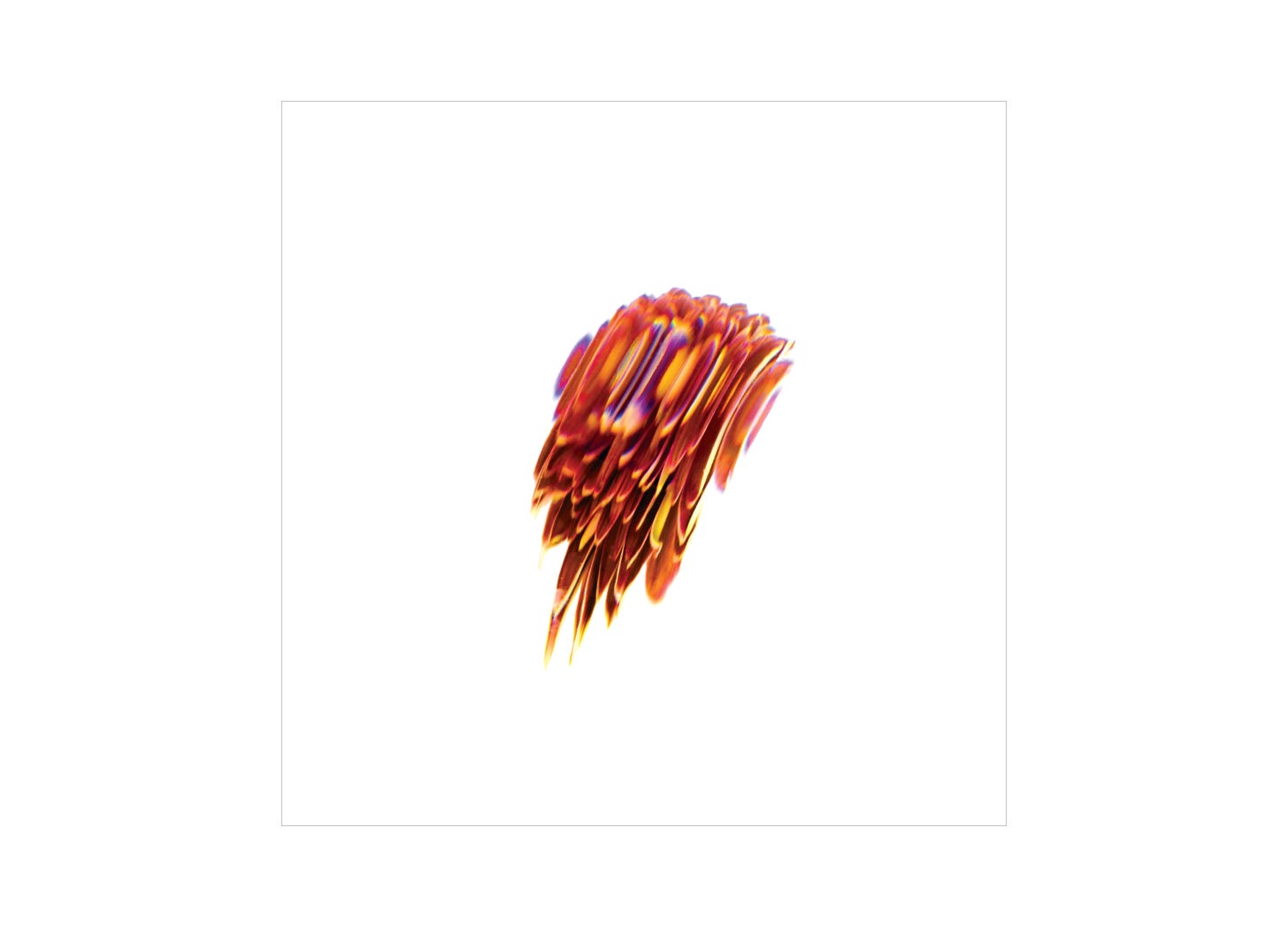
Topdown Dialectic
False LP A
False Aralia
Who or what is Topdown Dialectic? Until a few months ago, this was a perfectly reasonable question. For more than a decade, the project had steadily dropped releases—most of them populated only with songs that were exactly five minutes in length—and had done so while A) racking up a growing amount of critical acclaim and B) sharing almost no information about how the music was made or the identity of who’d actually made it. By the time that 2026 rolled around, the curiosity around Topdown Dialectic hadn’t quite reached a “Who is Burial?” level of mania, but within a very specific sector of electronic music (i.e. mostly introverted and very online ambient and dub techno nerds), the mystery surrounding the project had become a persistent topic of conversation.
That mystery, however, has now been solved, as the announcement of False LP A included a voluntary admission that Topdown Dialectic was none other than Izaak Schlossman, an experimental music veteran who’s currently based in San Francisco and is also one half of sophisti-synth-pop duo Loveshadow.
In retrospect, Schlossman was the most likely candidate. The last three Topdown Dialectic albums were issued by Peak Oil, an imprint that’s been beautifully curated by longtime kranky affiliate and DIY jack-of-all-trades Brian Foote. During the past few years, Foote has started up an additional pair of labels, one of which (False Aralia) is devoted entirely to Schlossman’s various musical endeavors. Filled with dubby abstractions and presented with relatively little in the way of supporting context, the False Aralia releases certainly bore a certain resemblance to the work of Topdown Dialectic, but with neither Foote nor Schlossman addressing the matter directly, the aforementioned ambient and dub techno nerds were left to speculate.
With that sort of speculation no longer necessary, will some of the excitement around Topdown Dialectic begin to dissipate? It’s possible, especially considering that between Topdown Dialectic and the steadily growing False Aralia catalog, there is now a true abundance of Schlossman material on offer. At the same time, neither audiences nor critics have so far shown any signs of creeping boredom. The response to False LP A has been extremely positive, with the album drawing rapturous praise from Pitchfork, Boomkat (who, in fairness, are motivated in part by the practical need to move some units), bass god The Bug and even First Floor contributor Ryan Mandelbaum (a.k.a. ghosttropics), who declared directly on the record’s Bandcamp page that it was “very clearly [his] favourite album of the year so far” and that “one day Izaak Schlossman's name will be spoken right next to Robert Henke and Sasu Ripatti.” One can only assume that it won’t be long before the Unsounds and CTMs of the world come calling (if they haven’t already), and though Schlossman almost never performs as Topdown Dialectic—the project’s live debut happened only last year—maybe that’ll change now that he’s revealed his identity to the world.
Without question, the narrative around False LP A is fantastic, but is the record itself any good? Well, of course it is. Truth be told, it’s not all that different from previous Topdown Dialectic efforts, probably because a significant chunk of the album consists of archival material recorded between 2013 and 2016. The tracklist does include some more recent compositions as well, and though no indications have been given about which of 16 songs on offer are old and which ones are new, the consistency of the music renders those distinctions largely meaningless. In simpler terms, anyone who enjoyed the vaporous muck and funk-dotted haze of earlier Topdown Dialectic releases is sure to be satisfied by this latest full-length. Sure, the project continues to take cues from ambient and dub techno, but at the end of the day, it’s too kinetic for the former and too unpredictable for the latter, existing in its own, uniquely hypnotic netherworld.
In his Pitchfork review, writer Andrew Ryce nodded to r/TheOverload, a subreddit devoted to “unconventional club music” of all shapes and sizes. That, not surprisingly, provoked a response in that very same forum, and while most of the participating Redditors in the thread seized the chance to gripe about Pitchfork, one user shared the following thoughts:
I don’t really get Topdown Dialectic. I like one or two of the songs but they all just sound like half of a song.
Funnily enough, this person—who’s clearly not a fan—has inadvertently hit upon something that’s not only true, but is at the very core of Topdown Dialectic’s appeal. Schlossman’s compositions aren’t exactly minimal, but they’re never overstuffed; they’re also loopy and repetitive, and he often prefers processed fragments of sound to fleshed-out notes and intelligible vocal phrases. But on a more fundamental level, his music is also just weird. Not weird in a “wear funny clothes, stick a pencil in your ear and get up in front of the class to do a silly dance” way; it’s more that the Topdown Dialectic material seems to blithely (and calmly) defy even the loosely defined convention of experimental music, cruising along at a leisurely speed and sometimes heading towards nowhere in particular.
While False LP A is technically divided into separate songs, those songs feel less like fully formed statements than temporary portals into Schlossman’s understated workflow, not to mention the sparsely populated (albeit undeniably tripped-out) space he prefers to inhabit. To listeners who’ve grown accustomed to the dopamine-on-demand dynamics of streaming platforms, or even the attention-demanding thwacks of an urgent kick-drum pattern, the five minutes that each one of those portals is open might feel like a meandering eternity. Appreciating False LP A does require some serious patience—the album, remember, is literally 80 minutes long—but whether you ruminate on the record’s every detail or surrender yourself to its hazy expanses and reverb-glazed rhythms, what’s perhaps most rewarding is the slow realization that what you’re hearing is the work of someone who’s not just determined to do their own thing, but is deeply content to do so.