

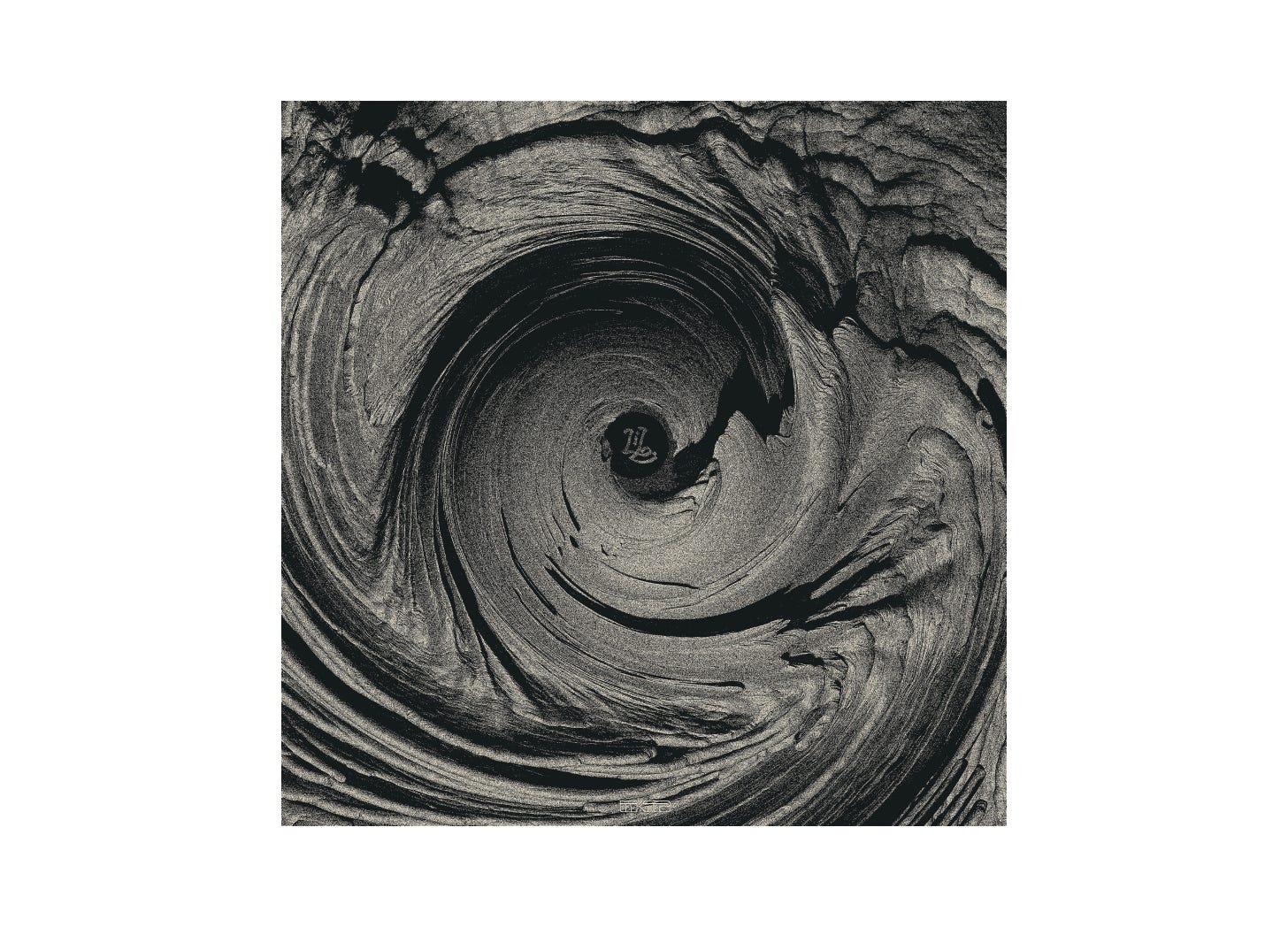
Karim
Lila
Tikita
Techno is now a fully global phenomenon, but even its biggest adherents have to admit that the genre is perhaps a bit too wedded to the kick drum. No disrespect to Jeff Mills or any of the 909-wielding devotees who’ve followed in his wake, but over the years it’s become harder and harder to coax something vital out of a rigidly thumping, four-on-the-floor drum pattern. It’s not that a thundering kick is no longer capable of powering a dancefloor; in many ways, it’s become a kind of default prompt, something that even the most clueless punters recognize as a sign that it’s time to move their bodies. That’s fine of course. Humans have been responding to percussive stimuli since times prehistoric, but in a time when the average techno night often feels less like a journey toward transcendence and more like an infinite march to nowhere, artists ought to be encouraged to switch up the rhythmic formula.
That’s one reason that the globalization of techno—and electronic music in general—has been such a creatively positive development. Sure, it’s resulted in plenty of continent-hopping expats “discovering” the sounds of the Global South and awkwardly stitching them to preexisting (and usually stock-standard) electronic templates, but what’s much more interesting is when producers from outside of Europe and North America bring their own musical traditions to the table. That’s exactly what Karim—a Moroccan artist who’s been running the Tikita label for more than a decade—has done on Lila, his long-brewing debut album.
Borrowing from the music of the Gnawa, a religious-spiritual musical tradition descended from West African peoples who were enslaved and brought to Morocco hundreds of years ago, Karim zeroes in on the idea of the lila (“night’ in Arabic), which he describes as “an all-night-long ritual of rhythm designed to induce participants and musicians alike into a healing trance state.” As such, the LP has a distinctly psychedelic feel—one that swerves past the hippie-coded, “drop some acid and trip out” aesthetic that term usually implies, and instead uses its woozy textures and whirling loops to crack open a portal to the subconscious.
All this happens, it should be said, without kick drums, and without much of anything that sounds like it came out of the standard techno toolkit. Lila is a deeply rhythmic effort, but its percussive elements feel organic, despite the fact that the LP was wholly assembled with modular synthesizers.
The highlights are numerous. On “Philipoussis,” the song’s hypnotic undulations briefly give way to a serene patch of plinky, glass-like tones, while the steadily percolating “Kiyex” sits somewhere between a drum circle and a cosmic wormhole. Jittery, jagged and IDM-adjacent, “Joul à lèvre” buzzes like a downed power line, and the feverishly pulsing, ever-evolving “Kille”—which wouldn’t be out of place on a Shackleton record—makes clear that a meditative track doesn’t have to be a sleepy affair. Yet it’s “Miloir,” the album’s epic, nine-minute closer, that truly ramps up the energy level, bringing a warehouse vibe to the middle of the Sahara.
Even so, Lila at no point sounds like a techno version of the Dune soundtrack. Although Karim certainly could have stuffed the record with North African pastiche—and likely would have been rewarded for it—what he’s done instead is so much more compelling. It’s not that the album sounds like nothing else—funnily enough, it at times recalls the big-room psychedelia, ambitious world-building and look-beyond-the-dancefloor approach of iconic acts like Orbital and the Chemical Brothers—but its coherence and clarity of vision is rare, particularly in this day and age. Dispensing with techno’s usual drum sounds is part of that, but what’s far more significant is the way that Karim has managed to adapt and mold the genre’s standard framework into a vehicle for his own authentic expression, both personal and cultural. Techno was never meant to be just one thing, and records like this one demonstrate just how much it can benefit from an infusion of new ideas and perspectives.