

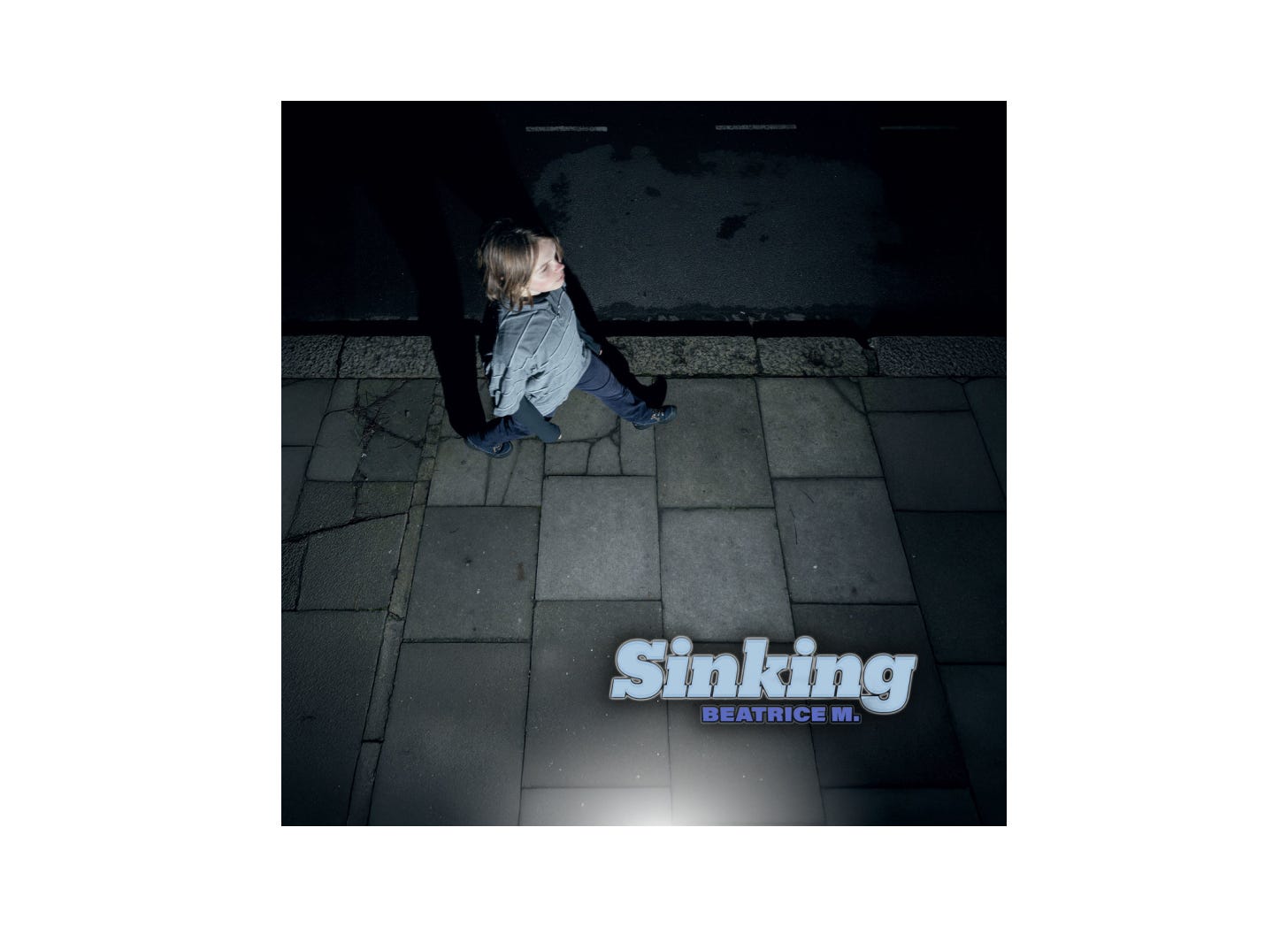
Beatrice M.
Sinking
Tectonic
Dubstep’s well-reported resurgence in deeper dance music scenes reaffirms one of the great tenets of soundsystem music—tradition. You can map all kinds of stylistic shifts in the Jamaican-rooted culture from the original mix-ups of mento, soul and ska through roots, dub, dancehall, steppas and onwards, but at the same time, there’s a persistent sense of ritual and maintenance of musical values that distinguishes the many strains of descendant bass music from other dance music forms. In this realm, music is made with a specific audience and physical experience in mind, exclusives command respect and mark out the strongest sets, and the commitment to build and run a soundsystem is seen as a solemn service to the dance as a church-like congregation. Whichever niche is on display, there’s a timeless quality that allows the newest and oldest tunes to sit alongside each other comfortably, with a certain amount of stylistic consistency depending on the system, event and DJs playing.
Beatrice Masters, better known as Beatrice M., radiates this same spirit in their approach, and in the span of just a few years, has become one of the most vital instigators in contemporary dubstep. In contrast to the genre’s more aggressive strain, the Bait label founder champions a deep and meditative sound, one with techno textures and delicate, harmonious atmospheres that restore rather than deplete. It’s redolent of the techno-influenced wave of 140-bpm club music that emerged in the late 2000s, and Masters has made that connection clear, passionately documenting that era through their writing and radio broadcasts.
With their own productions, Masters doesn’t seek to reinvent the wheel but rather uphold the foundational sounds and values that inspired them, adding their own signature along the way. Just three years removed from their first release, it’s impressive to see how much ground the French-British artist has covered leading up to their debut full-length, Sinking. Arriving via Pinch’s foundational dubstep label Tectonic, the LP is a mature, measured work that flows with a cohesive, understated poise and is clearly pitched towards a proper album experience. Opening number “Ever” ushers you into Masters’ soundworld in a dense, rippling pool of microsamples soaked in delay and a distinctly minimal drum set. It’s closer to ambient than anything club-related—the consummate intro track.
Dubstep actually lends itself to introspective listening; the genre’s half-time pace allows plenty of space for downtempo beat constructions, and Masters relishes the opportunity to arc broad sweeps of mellow, blue-hued chords through their pristinely produced cityscapes. It’s modernist music, all tight, angular sequencing and polished glass textures. And though echoes of artists like Martyn and 2562 can be heard in the work, what distinguishes the music are the vistas it evokes, which feel more contemporary rather than futuristic.
Sinking’s mid-section does pick up a distinctly technoid thrust, as “Disco Corner” relishes a swinging, four-on-the-floor thump and Sir Hiss collab “Juice” marches on a steppas-coded pulse. The title track nimbly cuts between double and half-time kicks for a perfect push and pull between rhythmic disciplines. Throughout the record, the synth work maintains a lush, brain-massaging demeanor that harkens back to Basic Channel and is especially prevalent on beatless reverie “Dear Dubstep.” That particular track title is instructive, as Masters has created not just an album, but a devotional tribute to the sound that has so deeply and visibly moved them. Homage can be a tricky field to navigate and make your own, but the sincerity coded into their whole approach shines through on what’s ultimately an immensely satisfying full-length.
 | A guest post by
|